Home Services Equipment Service Area Blog Gallery FAQ Contact Call 0416 166 836 Get a Free Quote

A Better Filter. Clearer Water. Less Hassle.

Your filter is the hardest-working part of your pool. A tired or undersized one costs you in cleaning time, chemicals and wear on your pump. We size it right, plumb it properly, and leave you with a setup that just works.

Recent work

Before & after. Real jobs, real photos.

Two recent filter upgrades we’ve done: the tired old setups we started with, and what we left behind.

Cartridge upgrade · Re-plumb

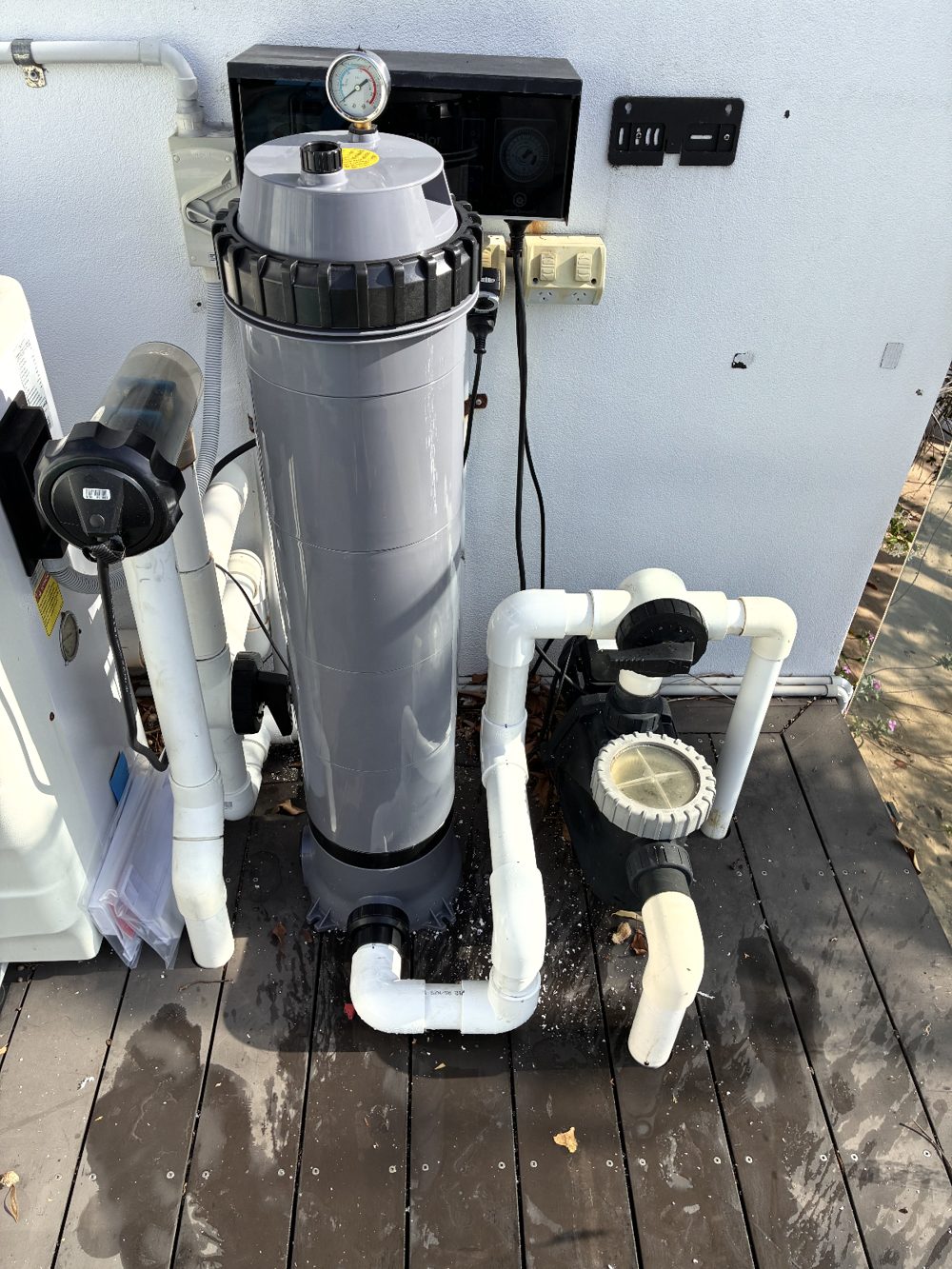
Small cartridge → high-capacity cartridge

This filter was too small for the pool, so it clogged fast and needed constant cleaning. We swapped it for a modern, high-capacity cartridge filter, then re-plumbed the connections so the whole setup sits neat, square and leak-free.

  • Bigger cartridge area: cleaner water and longer between cleans
  • Pump no longer straining against a clogged, undersized filter
  • New pipework and unions for quick, easy servicing later
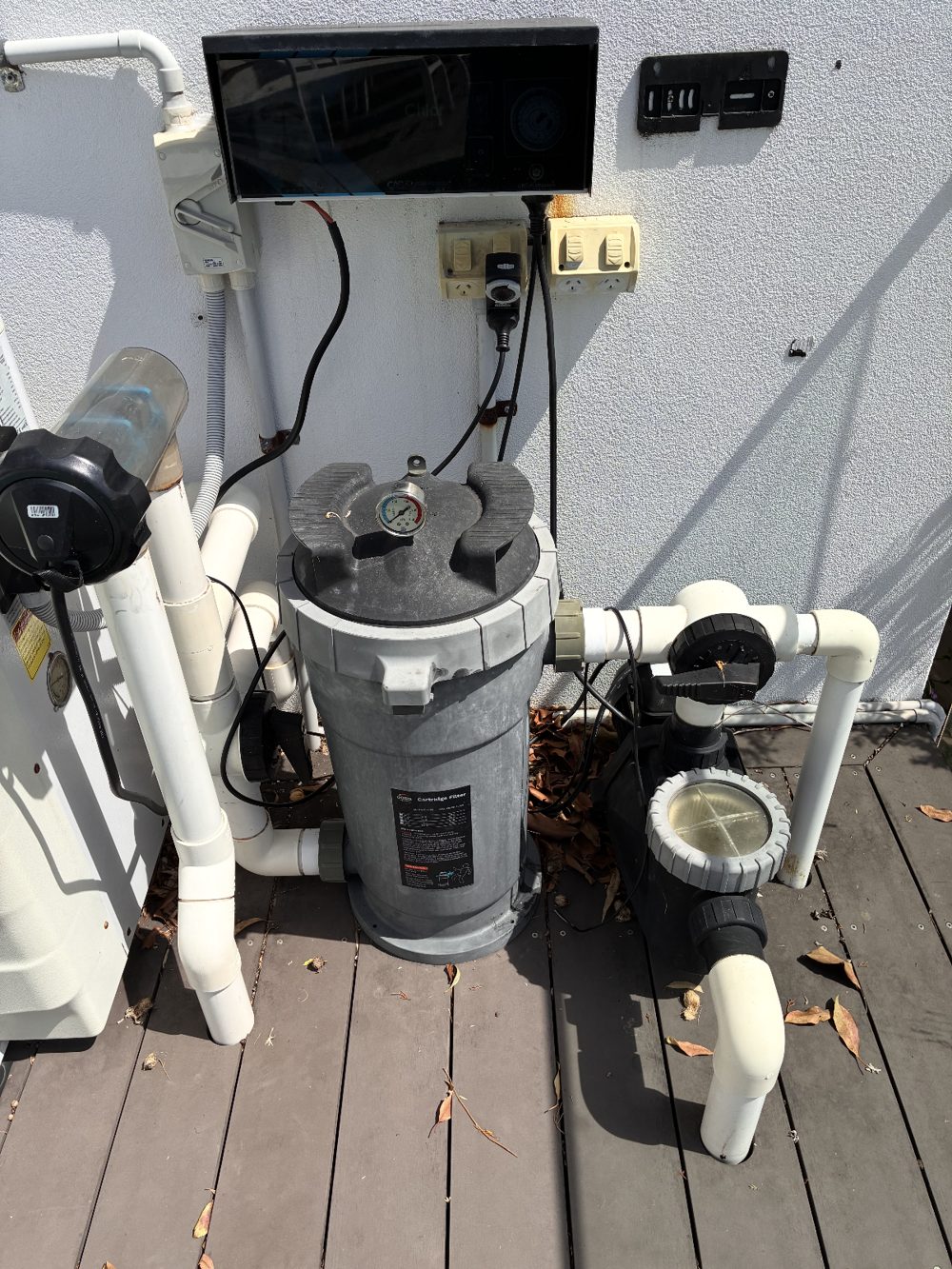
Before: small undersized cartridge pool filter next to the pump
Before
After: new high-capacity cartridge filter installed with fresh PVC plumbing
After
Sand filter upgrade · Full re-plumb

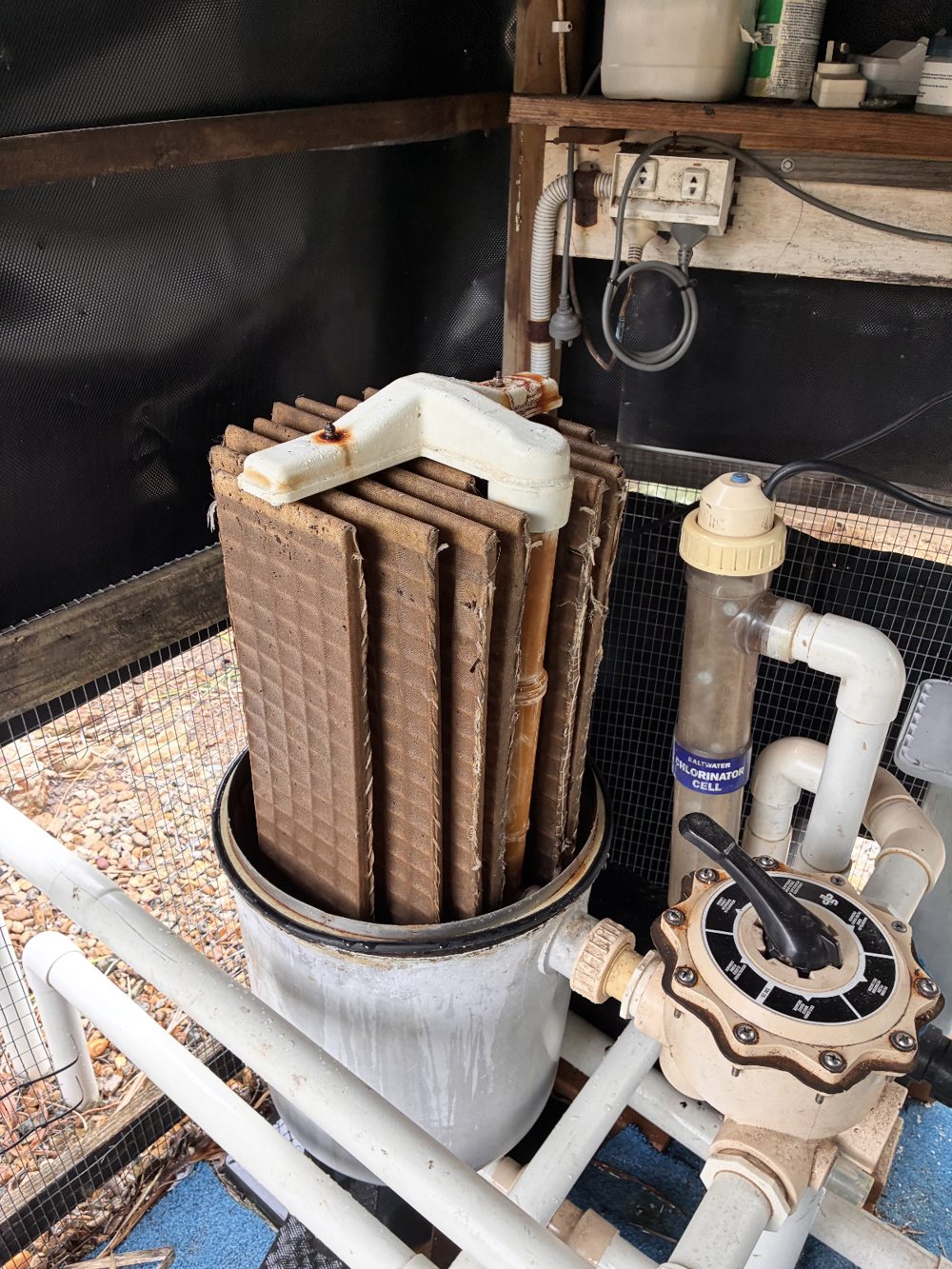
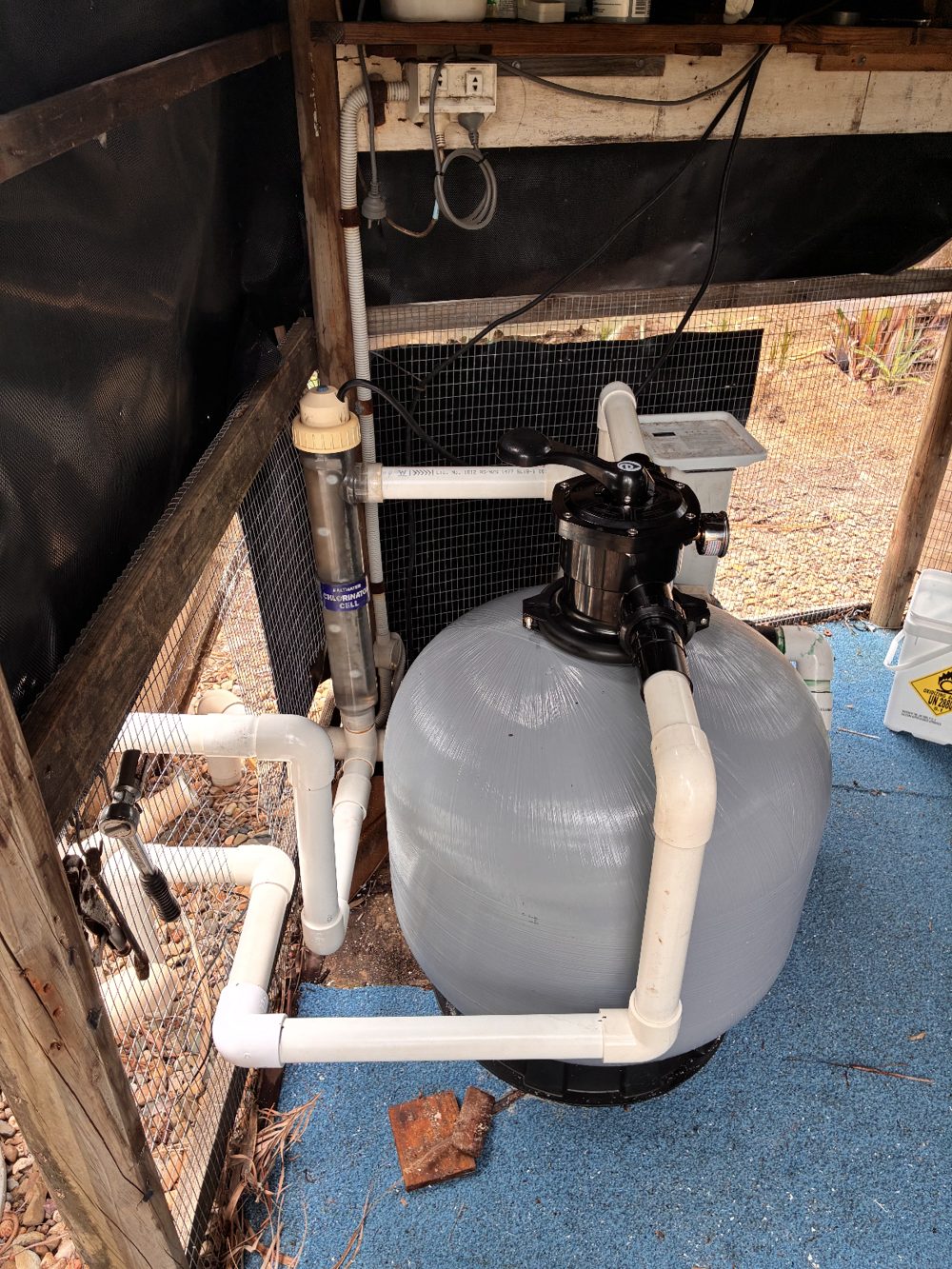
Worn-out filter → new sand filter

The old filter had done its time. Its elements were stained and fraying, and the valve was weathered and tired. We replaced it with a new sand filter and multiport valve and re-plumbed the run in fresh PVC, so the owner has a set-and-forget filter that backwashes in minutes.

  • No more filter elements to buy and replace
  • Backwash and rinse in minutes, no hosing down by hand
  • Tough, simple setup built for years of outdoor use
Before: old worn and stained filter elements removed from the filter housing
Before
After: new sand filter with multiport valve and fresh PVC plumbing
After
Why upgrade

What a proper filter upgrade gets you.

Most pool owners only think about their filter when the water turns cloudy. But it’s working every minute your pump runs, and an undersized or worn-out one quietly costs you money, time and equipment life. Here’s what changes when it’s done properly.

Lower running costs

When a filter can’t keep up, your chlorine gets used up fighting the dirt, oils and bacteria the filter should have caught. The result is more dosing, more shocks and more cloudy-water headaches. A correctly sized filter takes that load off your chemicals, and off your wallet.

  • Less chemical spent rescuing cloudy water
  • Fewer replacement parts over the life of the system
  • Less wear on the pump, the most expensive part of your setup

More efficient

Your pump and filter work as a team. A clogged or undersized filter creates back-pressure, so the pump works harder, runs hotter and wears its seals and bearings out sooner. Match the two properly and water flows freely, so all of it gets turned over and filtered.

  • Less strain on the pump motor and seals
  • Better turnover, so the whole pool gets filtered, not just part of it
  • Often lets you run shorter pump cycles, which saves power

Clearer water

Filtration does the heavy lifting and chemicals finish the job. More filter area and fresh media trap the fine particles, dead algae and sunscreen oils that make water look dull, even when the test strip reads perfect. Gold Coast pools cop storm debris, pollen and heavy summer use, so a filter with some headroom makes a real difference.

  • Bounces back faster after storms and pool parties
  • Sparkle you can actually see, not just good test numbers

Less maintenance

An overworked filter needs constant attention. You’re cleaning it often, the pressure keeps creeping up, and the pool never quite settles. A properly sized setup holds its pressure longer between cleans. With a sand filter, cleaning is a few minutes of backwash and rinse instead of pulling out and hosing down cartridges.

  • Longer gaps between filter cleans
  • A simple routine you’ll actually stick to
  • More weekends swimming, fewer spent fixing

Homeowner tip: watch your pressure gauge

Note the reading on your filter’s gauge right after a clean. That’s your “clean pressure”. When it climbs about 50–70 kPa (roughly 8–10 psi) above that, the filter is due for a clean or backwash. If it climbs back up within days of cleaning, the filter is likely undersized or the media or cartridge is worn out. That’s the point where an upgrade starts paying for itself.

Cartridge vs sand

Which filter is right for your pool?

Both are great when they’re sized and installed properly. Here’s the honest breakdown. We’ll recommend whichever suits your pool, not whichever costs more.

Option 1

Cartridge filter

The good

  • Finer filtration for very clear water
  • No backwashing, so no water sent down the drain
  • Compact, a good fit for tight equipment pads

The trade-offs

  • Cartridges need regular hosing down by hand
  • Cartridges wear out and have to be replaced every few years

Best for: owners who want the clearest water and don’t mind a quick hose-out.

Option 2

Sand filter

The good

  • Lowest-fuss option: backwash and rinse in a few minutes
  • No cartridges to buy, and media lasts for years
  • Tough and simple, with very little to go wrong

The trade-offs

  • Backwashing uses some water each time
  • Standard sand filters a little less finely (glass media closes the gap)

Best for: set-and-forget owners, holiday homes and busy family pools.

Upgrade the media

Already on sand? Your media might be the problem.

The media inside a sand filter doesn’t last forever. Over the years it clumps, channels and wears smooth, so water takes the easy path straight through and the fine particles get back into your pool. If your water won’t clear no matter what you dose, the media is often the culprit, not the chemicals.

The good news: you don’t always need a new filter. A media change is a quick, affordable job, and it’s the perfect time to decide between fresh sand and glass.

Signs your filter is due

  • Cloudy water that won’t clear after dosing
  • Pressure gauge climbing quickly after a clean
  • Cartridges torn, flattened or stained brown
  • Leaks, cracks or a weathered multiport valve
  • The pump sounds like it’s working too hard
Call Now for a Free Filter Check
Sand vs glass media

Fresh sand or glass? Here’s the difference.

Both go into the same sand filter. The difference is in how finely they filter, how long they last and what they cost over time.

Media option 1

Filter sand

The good

  • Lowest upfront cost, the budget-friendly refresh
  • Proven and reliable, and suits every sand filter
  • Fresh sand instantly restores lost filtering performance

The trade-offs

  • Filters to roughly 20–40 microns, so the finest particles can slip through
  • Needs replacing about every 5 years as it clumps and channels
  • Porous grains can harbour bacteria over time
  • Longer backwashes, so more water down the drain

Best for: keeping costs down on a filter that’s otherwise in good shape, or when the budget’s tight right now.

Media option 2

Glass media

The good

  • Filters finer than sand, down to around 10–20 microns for noticeably clearer water
  • Lasts several times longer than sand before it needs replacing
  • Smooth, non-porous glass resists bacteria build-up and clumping
  • Backwashes faster and cleaner, so less water and fewer chemicals are wasted

The trade-offs

  • Costs more upfront than a bag of sand
  • Must be the right filter-grade glass, correctly sized for your filter (we handle this)

Best for: owners staying put for years, salt pools, and anyone who wants the clearest water for the least ongoing effort.

Which is more cost-effective?

Short term: sand

If you need the cheapest fix today, or you’re planning to sell or replace the filter in the next few years, fresh sand does the job for the lowest price.

Long term: usually glass

Glass costs more on the day, but because it lasts several times longer and wastes less water and chemical every backwash, it often works out cheaper over the life of the filter, with clearer water the whole time.

Not sure which suits your pool? We’ll check your filter, valve and laterals and give you an honest recommendation, with no upselling.

Why use a pro

Done right once, instead of fixed twice.

A filter swap looks simple until a glue joint lets go or the new unit is mismatched to the pump. Here’s what you get when Jackson does it.

Size it right

We match the filter to your pool volume and pump flow, so it runs efficiently and isn’t too big or too small.

Plumb it properly

Clean PVC runs, proper glue joints and barrel unions, so it’s neat, leak-free and easy to service later.

Test & commission

We prime, pressure-check and run the system, then show you how to backwash or clean it yourself.

Clean up & take away

The old unit goes with us, and your equipment area is left tidier than we found it, every time.

Is your filter costing you more than it should?

Send us a photo of your equipment and we’ll give you an honest read on whether to repair, refresh the media or upgrade.